El Calafate vs. Puerto Natales: Which Base Makes More Sense for Your Patagonia Trip?
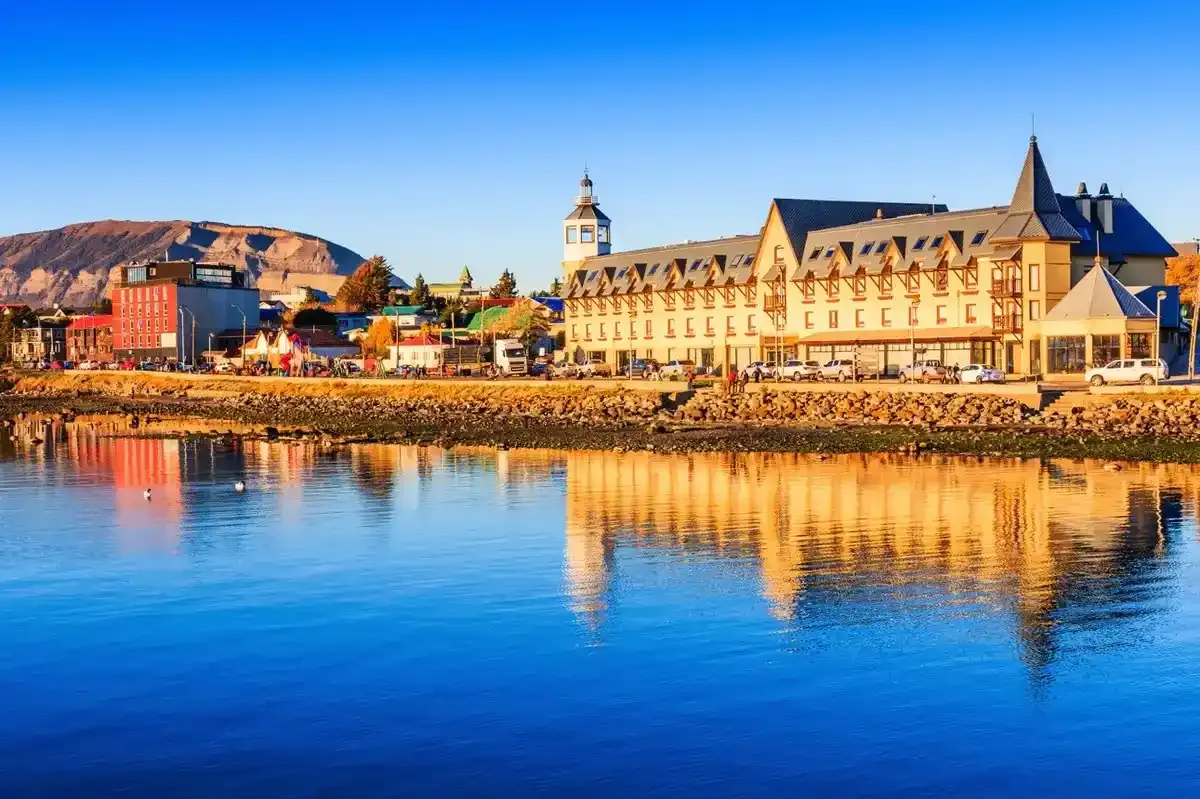
For most travelers doing the binational Patagonia circuit, the answer is both — and the real question is sequencing, not choosing. El Calafate and Puerto Natales are not competing bases. They serve different sides of the same circuit and sit three hours apart by road across the Argentine-Chilean border. That said, the balance of nights between the two matters. And if your trip focuses on only one side — Argentine glaciers or Chilean towers — the choice becomes more consequential. Here is how to think about it.
What Each Town Actually Offers
El Calafate (Argentina)
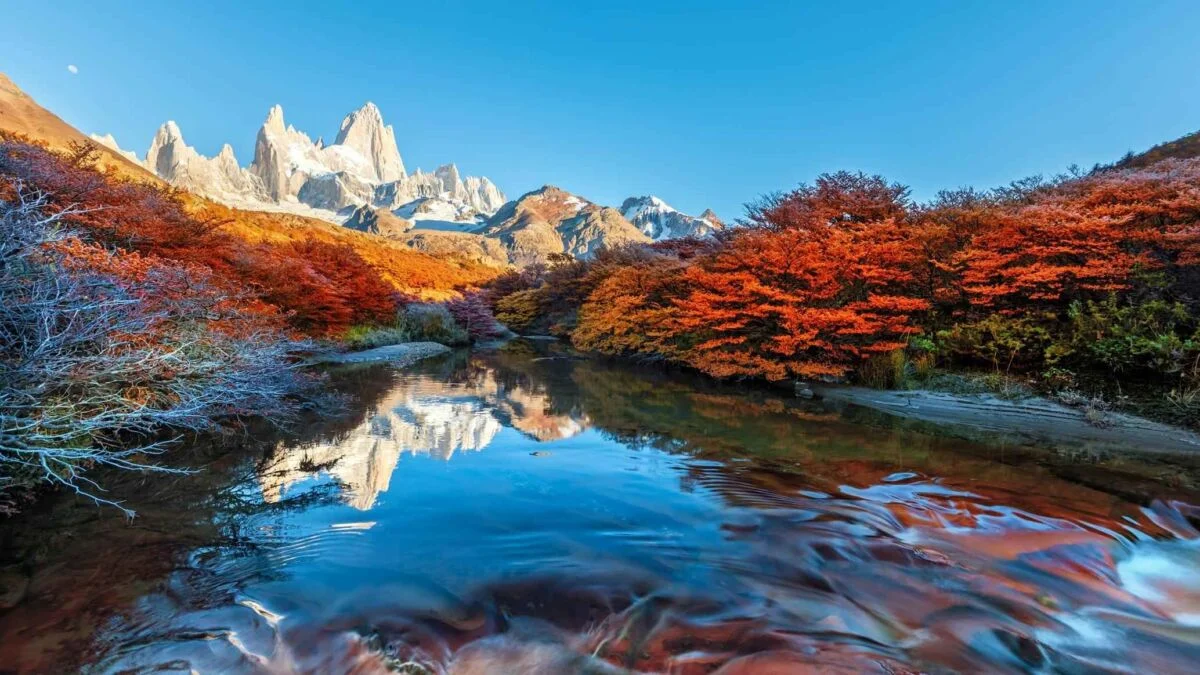
El Calafate is a town of approximately 25,000 people built around the tourism infrastructure of Los Glaciares National Park. It has a functioning international airport (FTE) with daily direct flights from Buenos Aires Aeroparque, a wide range of boutique hotels and lodges across different price points, and a commercial center that makes resupplying, changing money, and managing logistics relatively straightforward.
.
From El Calafate, the key destinations are:
Perito Moreno Glacier — 80 km, approximately 1.5 hours by road
El Chaltén — 218 km, approximately 3 hours by paved road
Torres del Paine (Chile) — approximately 280 km, 3 to 4 hours including the border crossing
.
El Calafate is also the town that Southwind Experience calls home — which means our knowledge of local logistics, property availability, and seasonal conditions here is first-hand and current.
.
Puerto Natales (Chile)
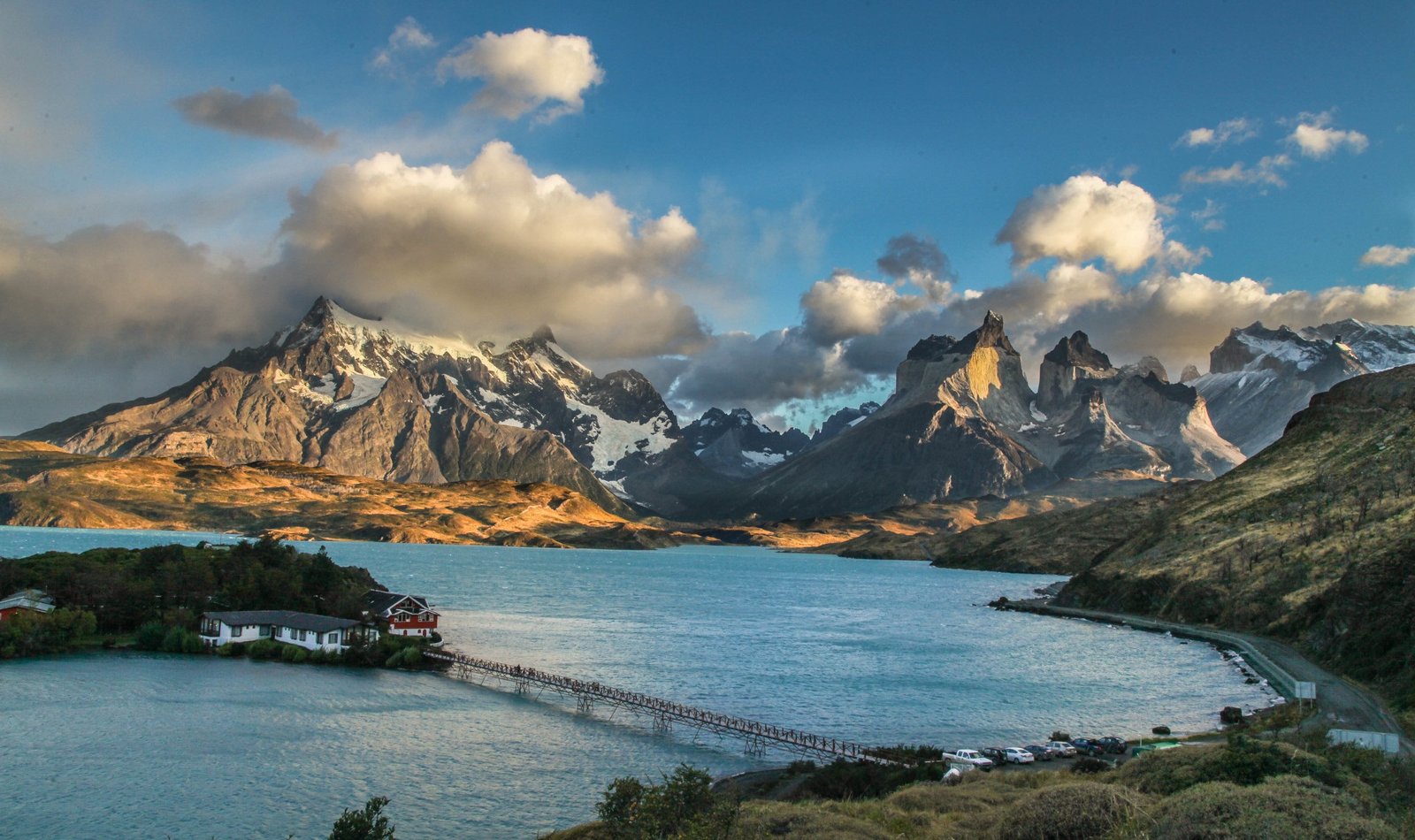
Puerto Natales is a smaller town of approximately 20,000 people on the shores of the Seno Última Esperanza in Chilean Patagonia. It has developed significantly as a tourism base over the last decade, with a growing number of boutique guesthouses and restaurants that make it genuinely pleasant rather than just a functional gateway.
.
From Puerto Natales, the key destinations are:
Torres del Paine National Park — 112 km, approximately 1.5 hours
El Calafate (Argentina) — approximately 280 km, 3 to 4 hours including the border crossing
Punta Arenas — 247 km, approximately 3 hours (for onward flights)
.
Puerto Natales does not have its own commercial airport. Travelers arriving by air must fly into Punta Arenas (PUQ) and transfer to Puerto Natales by road — adding approximately 3 to 3.5 hours to the journey from the airport. Some travelers use the small airstrip at Puerto Natales (PMC) served by DAP airline from Punta Arenas, but this operates with small aircraft on variable schedules.
.
The Flight Logic — Where It Gets Practical
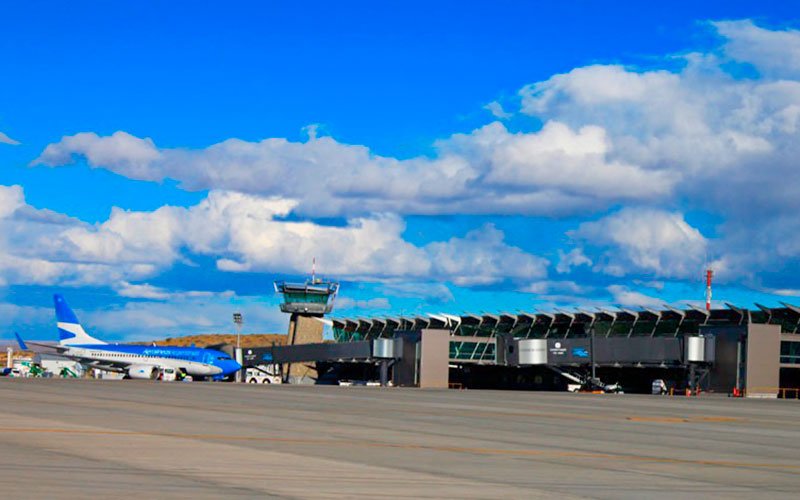
This is the single most important practical difference between the two towns, and it often determines the base decision more than any other factor.
.
El Calafate receives direct daily LATAM and Aerolíneas Argentinas flights from Buenos Aires (both EZE and AEP). Travel time is approximately 3 hours. The airport handles jet aircraft and operates year-round with minimal disruption.
.
Puerto Natales effectively requires flying into Punta Arenas first. Santiago to Punta Arenas is approximately 3.5 hours, then add the 3-hour road transfer. A journey from Buenos Aires to Puerto Natales via Punta Arenas takes the better part of a day.
.
For travelers arriving from North America, Europe, Asia, or Australia who route through Buenos Aires, El Calafate is significantly easier to reach. For travelers arriving from Santiago with Torres del Paine as their only destination, Punta Arenas to Puerto Natales is the natural route.
.
When El Calafate Makes More Sense as the Primary Base
Use El Calafate as your anchor if:
Your itinerary includes 3 or more days in El Chaltén (the transfer from Puerto Natales to El Chaltén is nearly 6 hours each way — impractical as a day trip)
You're combining Patagonia with Buenos Aires on the same trip (direct flight connection)
Your priority is the Argentine side — Perito Moreno, Lago Argentino navigation, estancias in Los Glaciares National Park
You're doing the full binational circuit and want the logistical simplicity of a well-connected hub for international arrivals
.
From El Calafate, a Torres del Paine extension is straightforward: a 3 to 4-hour private transfer crosses the border and delivers you to the park, typically arriving in time for an afternoon activity. The border crossing at Río Don Guillermo is routine and adds approximately 30 to 45 minutes to the journey.
.
Most travelers doing the El Calafate + El Chaltén + Torres del Paine circuit find that basing in El Calafate for the Argentine days and transitioning to accommodation inside Torres del Paine for the Chilean days is the most efficient structure — not staying in Puerto Natales at all.
.
When Puerto Natales Makes More Sense as the Primary Base
Use Puerto Natales as your anchor if:
Torres del Paine is your sole or primary destination and El Chaltén is not in the itinerary
You're doing the W Trek in the linear format (which naturally ends near Puerto Natales or Punta Arenas)
You're arriving from Santiago and Chilean Patagonia is the focus of the trip
You want to use Puerto Natales's proximity to the park for early morning trail access without a 1.5-hour transfer from inside the park
.
Puerto Natales works well as a base for Torres del Paine day hikers who want to return to a town in the evenings rather than sleeping inside the park. The 1.5-hour transfer to the park entrance means an early departure is necessary for trails like Base Torres, but it's manageable.
.
The Most Common Structure: Both, Sequenced
For the binational circuit that combines El Calafate, El Chaltén, and Torres del Paine — the most requested private Patagonia itinerary — neither town needs to serve as the exclusive base. A practical structure:
.
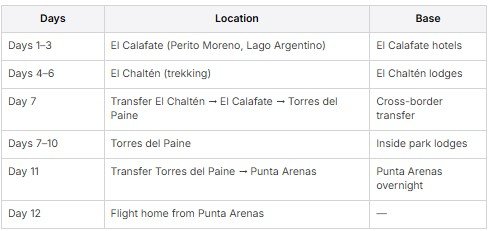
In this structure, Puerto Natales doesn't appear at all — which surprises many travelers who assumed they needed to stay there. For a W Trek in lodge format, accommodation is inside the park itself, making Puerto Natales an optional stop rather than a required base.
.
Accommodation Quality: An Honest Comparison
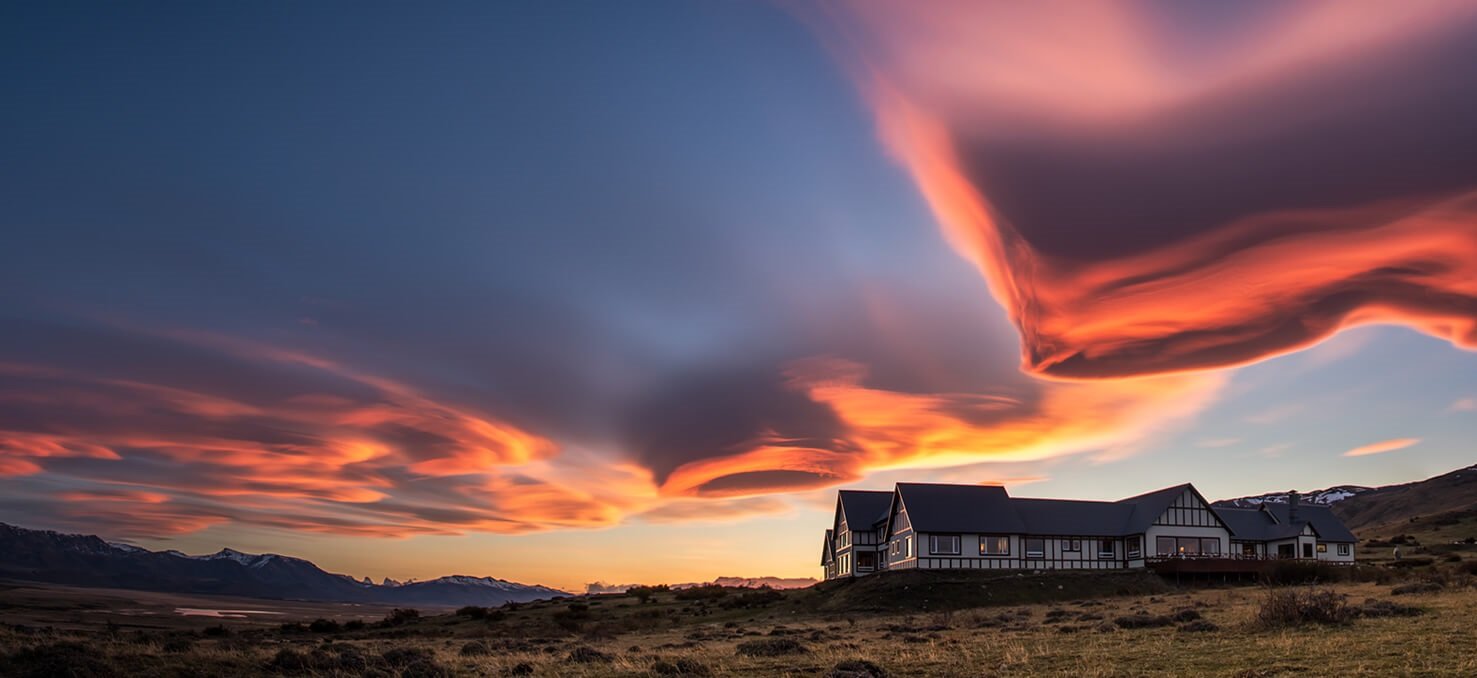
El Calafate has the stronger boutique hotel infrastructure. Properties like Eolo, Xelena, and Alto Calafate deliver genuine design and landscape quality with Lago Argentino views. The town also has mid-range options that don't require a large budget.
.
Puerto Natales has improved considerably but remains smaller in scope. The best boutique guesthouses in town — Indigo, Weskar, Altiplanico — are comfortable and well-run, but the range is narrower.
.
For accommodation inside Torres del Paine itself, the comparison doesn't apply — EcoCamp, Las Torres Hotel, and Patagonia Camp exist within the park and serve guests regardless of which town they consider their base.
.
The Border Crossing Between El Calafate and Torres del Paine
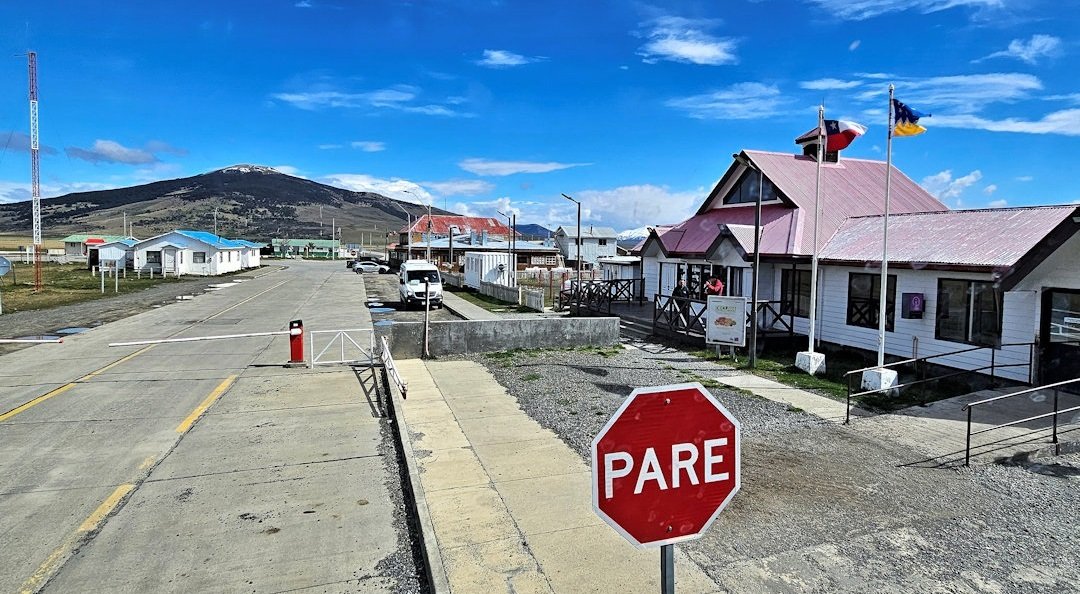
For travelers doing the binational circuit, the border crossing deserves specific mention. The crossing uses the Río Don Guillermo / Cerro Castillo border post on the Argentine side and the Cancha Carrera post on the Chilean side. The process involves:
.
Vehicle document inspection
Passport stamping on both sides
Biosecurity check (no fresh fruit, vegetables, or meat products can cross)
Total time: approximately 30 to 45 minutes on a normal day
.
The crossing is straightforward when pre-coordinated as part of a private transfer. Travelers who plan it independently sometimes encounter unexpected wait times during peak season when multiple vehicles arrive simultaneously.
.
The Bottom Line
If you're only visiting Torres del Paine: base in Puerto Natales or inside the park. The connection from Santiago via Punta Arenas is direct and the proximity to the park entrance justifies the location.
.
If you're combining El Calafate, El Chaltén, and Torres del Paine: anchor in El Calafate for the Argentine days, transition to inside-the-park accommodation for Torres del Paine, and treat Puerto Natales as a transfer point rather than a destination. The flight connection from Buenos Aires and the proximity to El Chaltén make El Calafate the more functional hub for the full circuit.
.
The question is not which town is better. It is which town you need to fly into and what your itinerary looks like when you draw it on a map.
.
Southwind Experience is based in El Calafate and coordinates private Patagonia itineraries across both the Argentine and Chilean sides of the circuit. We manage the border crossing, accommodation sequencing, and transfer logistics as part of a single itinerary rather than separate bookings.
Explore our Patagonia binacional itineraries