What to Expect on the Big Ice Trek: A Realistic Guide
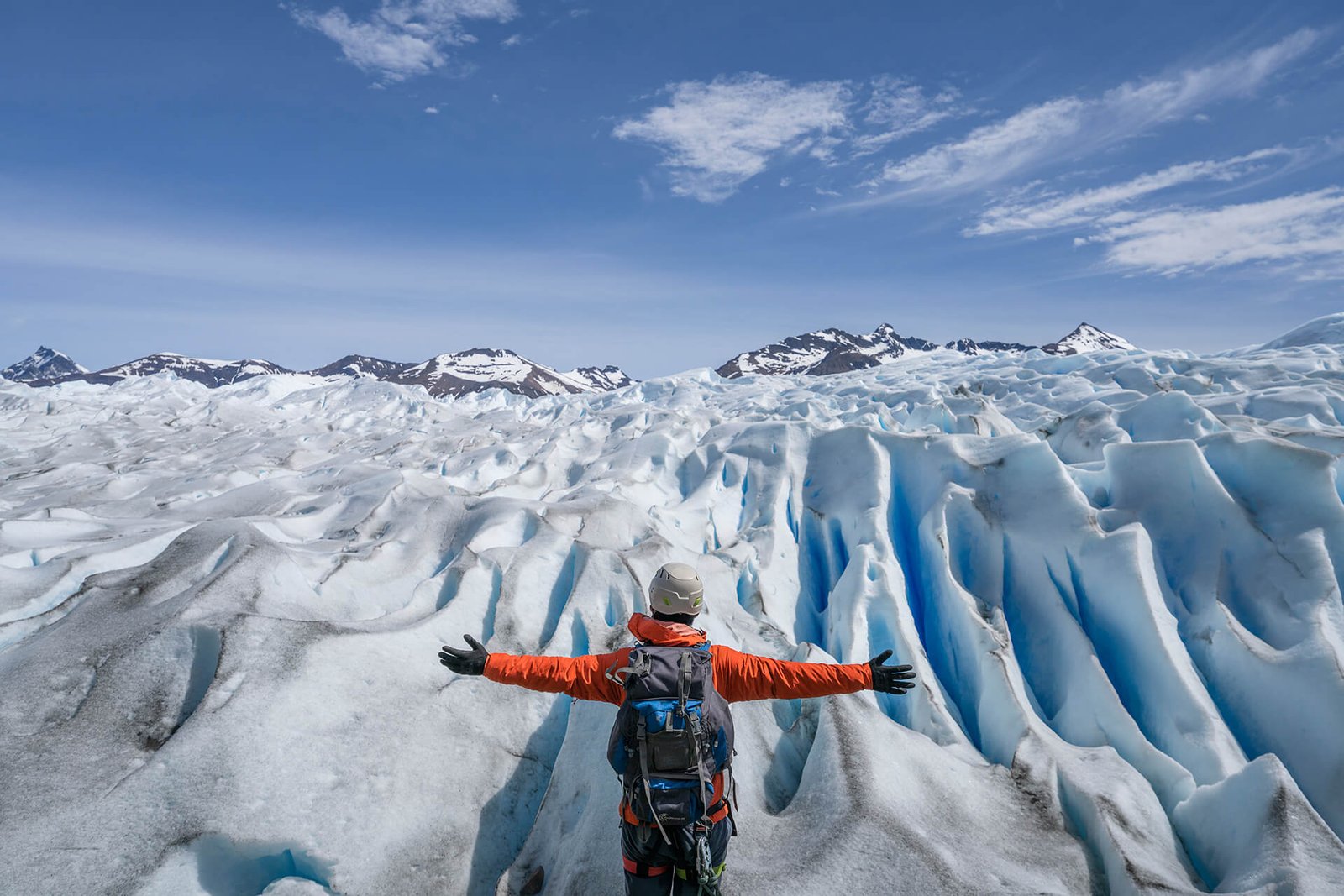
Big Ice puts you on the ice itself for roughly 3 to 3.5 hours. The full day, door to door, runs 11 to 12 hours: the drive to the park, the boat crossing, the forest and moraine walk to reach the glacier, gear fitting, the return and, on most departures, about an hour at the walkways. If your itinerary has an early departure or a long drive the next morning, that full-day commitment matters more than the ice time itself.
This guide breaks down where the hours actually go, what fitness level the trek demands, how it differs from the glacier walkways, and what happens if wind or weather cancels it.
How the Day Breaks Down
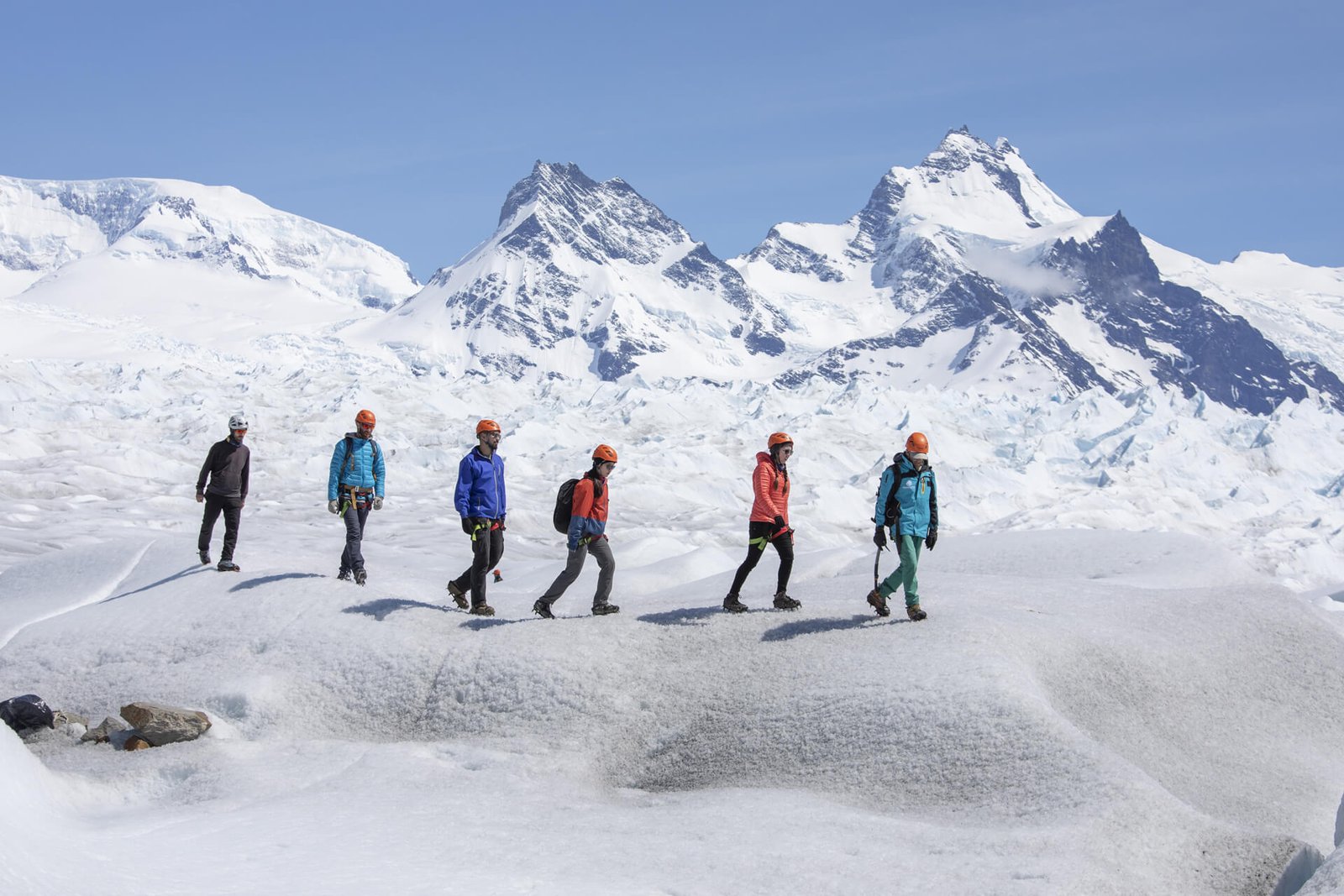
Departures leave El Calafate early, typically between 7:00 and 8:00 AM, for the roughly 80-kilometer drive to Los Glaciares National Park. The route runs along the shore of Lago Argentino and crosses the Centinela and Mitre rivers before reaching Bajo de las Sombras port, where the boat crossing begins.
Segment | Approximate time |
Transfer from El Calafate to Bajo de las Sombras port | 1 to 1.5 hours |
Boat crossing (Brazo Rico arm, Lago Argentino) | ~20 minutes |
Walk along the lateral moraine to glacier access | 1.5 to 2 hours |
Gear fitting (crampons, harness) and safety briefing | 20 to 30 minutes |
Ice trekking | 3 to 3.5 hours |
Return walk, boat, and transfer to El Calafate | Roughly mirrors the outbound leg |
Perito Moreno walkways (on most departures) | About 1 hour |
Total door-to-door | 11 to 12 hours |
These are typical figures for the standard Hielo y Aventura Big Ice operation; exact timing shifts with group pace, lake conditions, and season. Our team confirms the exact pick-up time the day before.
How Hard Is Big Ice, Really
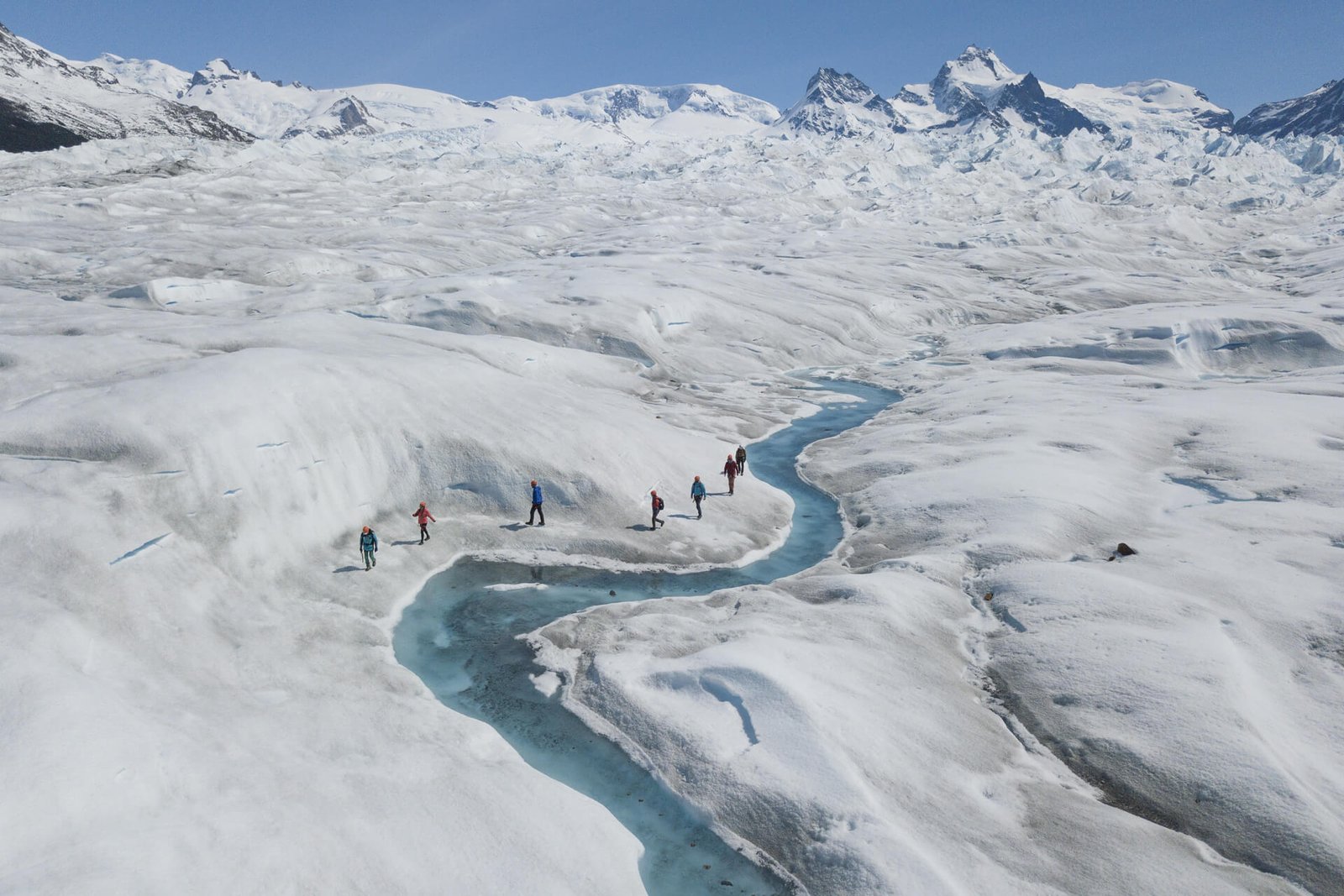
Big Ice is classified as high physical effort, and the restrictions reflect that. The tour is limited to travelers between 18 and 50 years old, and it's not recommended for pregnant travelers, anyone with a cardiovascular condition, or anyone with a disability that limits movement. Each traveler also signs a health declaration before the trek.
The demanding part isn't the ice itself — crampons make the surface manageable even for first-timers. It's the moraine approach: the lateral moraine trail has sections with slopes of up to 35° on loose, unstable rock, walked both on the way in and on the way back, when fatigue has already accumulated from the ice trekking in between.
That's also the reasoning behind the age ceiling: the terrain doesn't forgive an ankle roll or a slower pace the way a flat trail would, and the walk out comes when you are already tired.
Minitrekking's access point is different: a short beach walk with minimal elevation change, which is why it stays open to ages 8 to 65. If the moraine slope is the deciding factor for someone in your group, that's the practical alternative, not just the shorter ice time.
What You Actually Do on the Ice
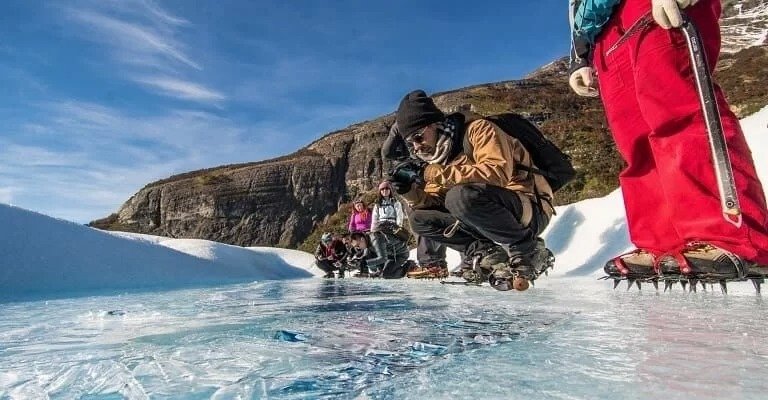
Perito Moreno covers about 250 square kilometers, with a 5-kilometer-wide front on Lago Argentino, and ice depths ranging from 170 to 700 meters. None of that is visible from the walkways — it's only apparent once you're standing on the surface, looking at the undulating back of a glacier that extends toward the horizon rather than a wall you view from a platform.
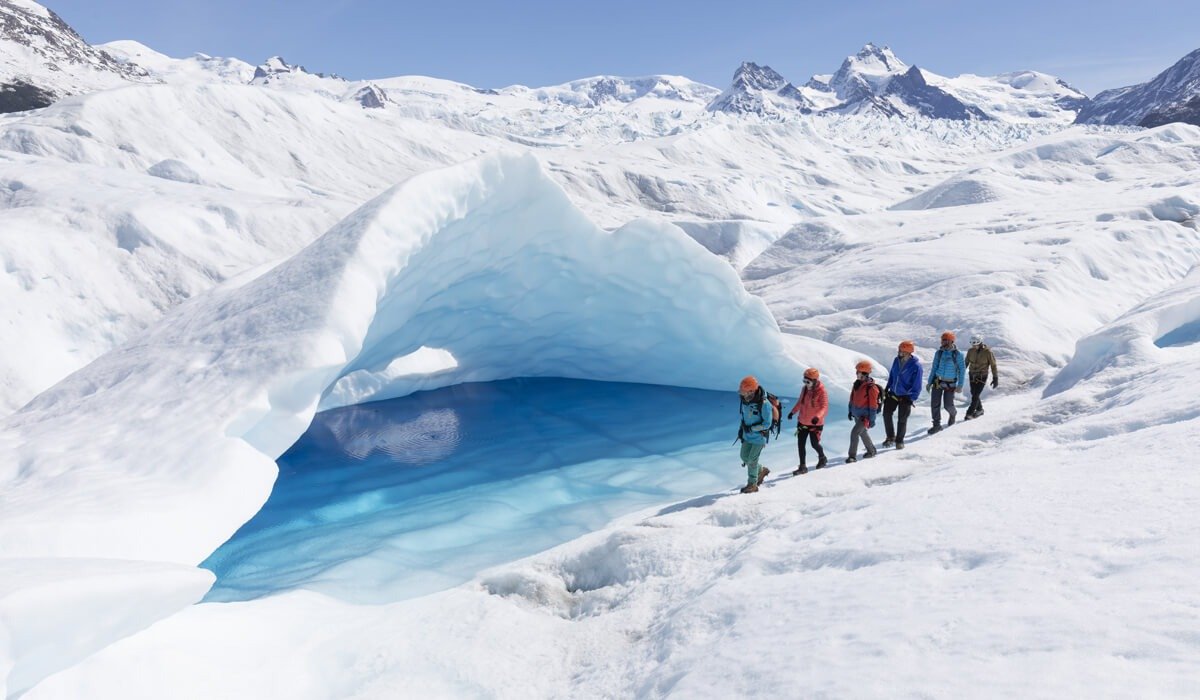
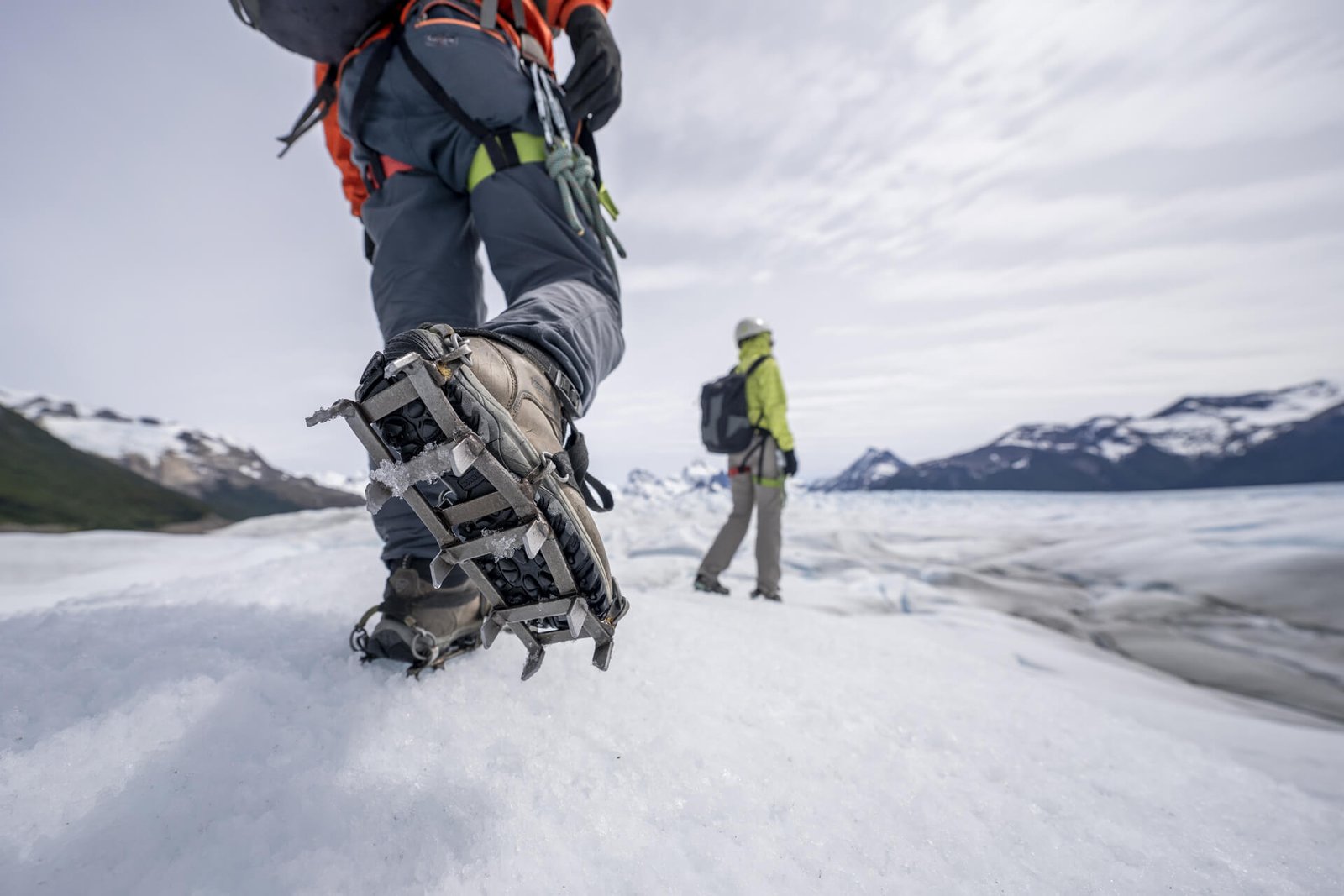
Once the crampons are on, guides lead the group along a route chosen that morning, based on where crevasses have opened or shifted overnight — the surface moves, so the path isn't the same from one week to the next. Some crevasses are crossed on foot where the ice bridges are solid; wider ones are skirted, and a few sections use fixed lines or short wooden footbridges where the guides have assessed the crossing as safe.
The color shifts as you move: surface ice is dull white where it's compressed with trapped air, but inside crevasses and ice caves, where the ice has been compacted for centuries, it reads as a dense, saturated blue. You'll pass meltwater channels cut directly into the surface and small pools where runoff collects — some deep enough to reflect the sky, others barely a puddle depending on the day's temperature.
Lunch happens on the ice itself, next to one of these meltwater pools, and it's common practice to refill water bottles directly from the runoff rather than carrying it in. Periodically, and without warning, a section of the glacier's face calves into the lake — audible before it's visible, a deep crack followed by the sound of ice hitting water somewhere out of sight. Guides explain how the glacier moves, and why, after decades of rare stability, it has begun to retreat in recent years, as the group moves, but pace is dictated by terrain: a wider crevasse field on a given day means a longer detour, which is part of why the ice-trekking window is a range and not a fixed number.
Big Ice vs. the Walkways
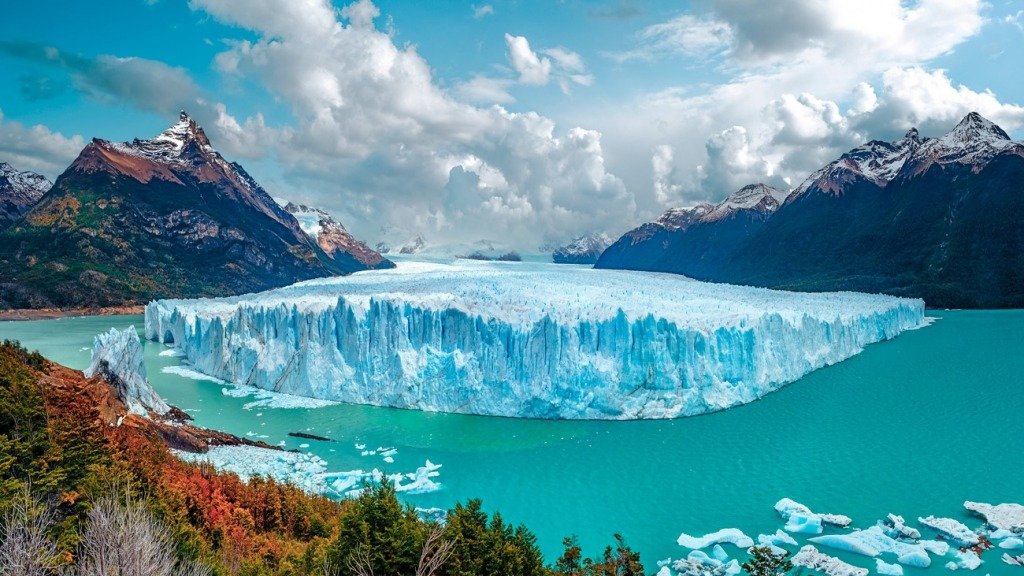
The walkway circuit is a self-guided viewing platform system facing the glacier's south wall — no crampons, no age limit, no fitness requirement, and no time on the ice itself. Most Southwind Perito Moreno days already include the walkways as the baseline visit; Big Ice is the add-on for travelers who want to stand on the glacier, not just look at it.
One thing to know when you book: Hielo y Aventura holds the concession for trekking on Perito Moreno, so Big Ice is always a small-group excursion, never a private one. What can be private is everything around it, from the transfers to how the day fits into the rest of your itinerary.
If you're still deciding between the two, we cover the full comparison — cost, physical demand, and who each option actually suits — in [Big Ice Trek vs. Perito Moreno Walkways: Which Experience Is Right for You?].
What Happens If Weather or Headcount Cancels It
Patagonia doesn’t do predictable weather, and Big Ice is designed around that reality rather than against it. Rain, wind, or a sky that shifts from bright sun to grey in twenty minutes — none of it cancels or interrupts the boat crossing or the trek across the glacier. The excursion runs as scheduled, in whatever weather the day brings.
That’s not a caveat; it’s part of what makes the experience authentically Patagonian. Walking across centuries-old ice under a moving sky, with wind coming straight off the Southern Patagonian Ice Field, is as much a part of Big Ice as the ice itself. Crampons, harnesses, and expert guides work the same in any conditions, and most travelers find that a changeable sky only adds to the sense of being somewhere genuinely wild and untamed.
Our team in El Calafate will let you know exactly what to pack for the day’s forecast, so you’re ready to enjoy it fully no matter what the weather does.
Who Should Book This
● Fit travelers who want glacier contact, not just a view — Big Ice is worth the full day.
● Groups with anyone outside 18–50 or with mobility limitations — Minitrekking or the walkways fit better without cutting the glacier from the day.
● Itineraries with an early flight or long drive the next day — build in a lighter following morning; this isn't a day to stack with another demanding excursion.
The Bottom Line
Big Ice delivers 3 to 3.5 hours of actual ice trekking inside an 11-to-12-hour day, most of which is transfer, boat crossing and the moraine approach. It suits fit travelers aged 18 to 50 without cardiovascular or mobility restrictions; anyone outside that range is better served by Minitrekking or the walkways. Southwind Experience sequences excursions like Big Ice into private Patagonia itineraries from our base in El Calafate