How to Cross El Calafate to Torres del Paine
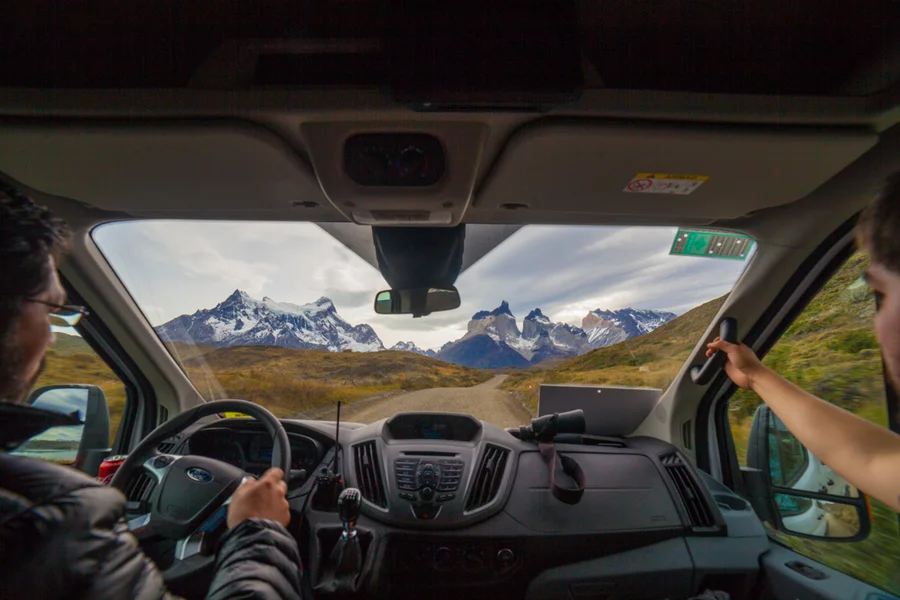
The crossing takes about 3 hours door to door — roughly 2 hours of driving from El Calafate to the border, 30–90 minutes for the crossing itself, and another 10–15 minutes to reach Villa Cerro Castillo on the Chilean side. Add 40–60 minutes more if your destination is inside the park (Lago Grey, Paine Grande, Laguna Amarga) rather than Cerro Castillo itself. In the high season (December–March), border processing can stretch closer to 2 hours when several tour buses arrive at once.
This border, known as Cancha Carrera on the Argentine side and Río Don Guillermo on the Chilean side, is the direct link between Los Glaciares National Park and Torres del Paine. Here's what the crossing actually involves.
The Two Border Posts, Step by Step
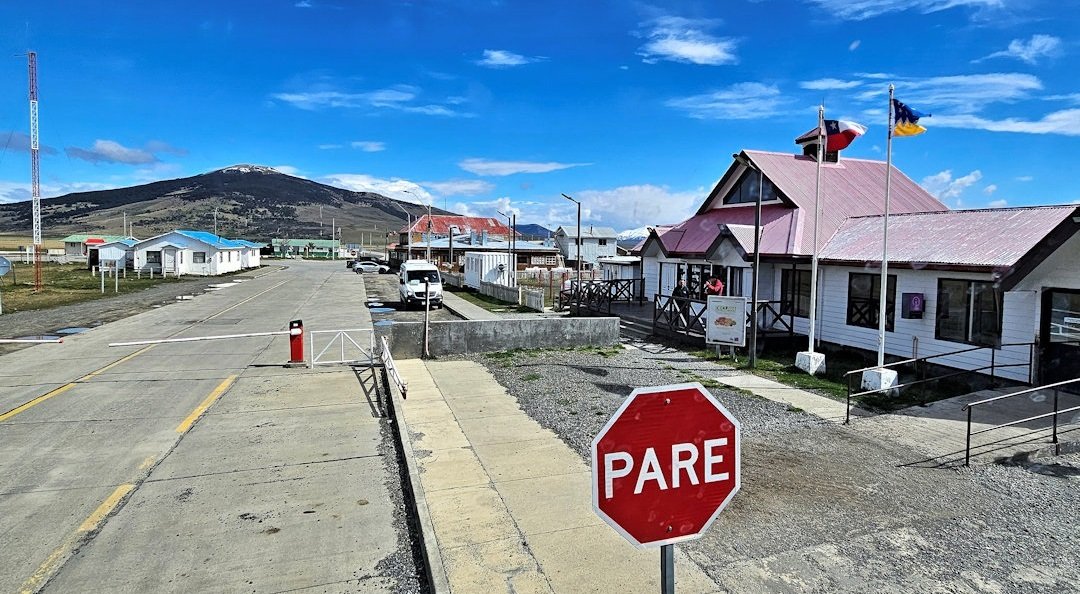
This is not one checkpoint — it's two, separated by about 7 km of no man's land.
Cancha Carrera (Argentina). Your driver handles the vehicle formalities here. You'll go through the Argentine National Migration Office and Customs on foot, present your passport, and get your exit stamp.
The gap. After clearing Argentine exit control, your driver navigates the 7 km — about 10 minutes by vehicle — gravel road bridging the two countries. This area is non-jurisdictional; stopping or exiting the vehicle in this sector is prohibited. No services here.
Río Don Guillermo (Chile). Chilean entry involves three separate checks: Policía de Investigaciones (PIC) for immigration, where border agents inspect your passport and issue an entry stamp alongside your digital or physical PDI Tourist Card that must be presented upon exiting Chile; Aduana for customs, and SAG (Servicio Agrícola y Ganadero) for the agricultural inspection. All luggage goes through the SAG check — through an X-ray scanner or physical inspection— including bags in the trunk of a private car.
Opening hours: entry into Chile 8:00 AM–10:00 PM, exit from Chile 8:00 AM–9:30 PM, daily including holidays. These hours have changed more than once since the crossing reopened in 2022, so confirm current hours before departure with your operator.
Documentation You Actually Need
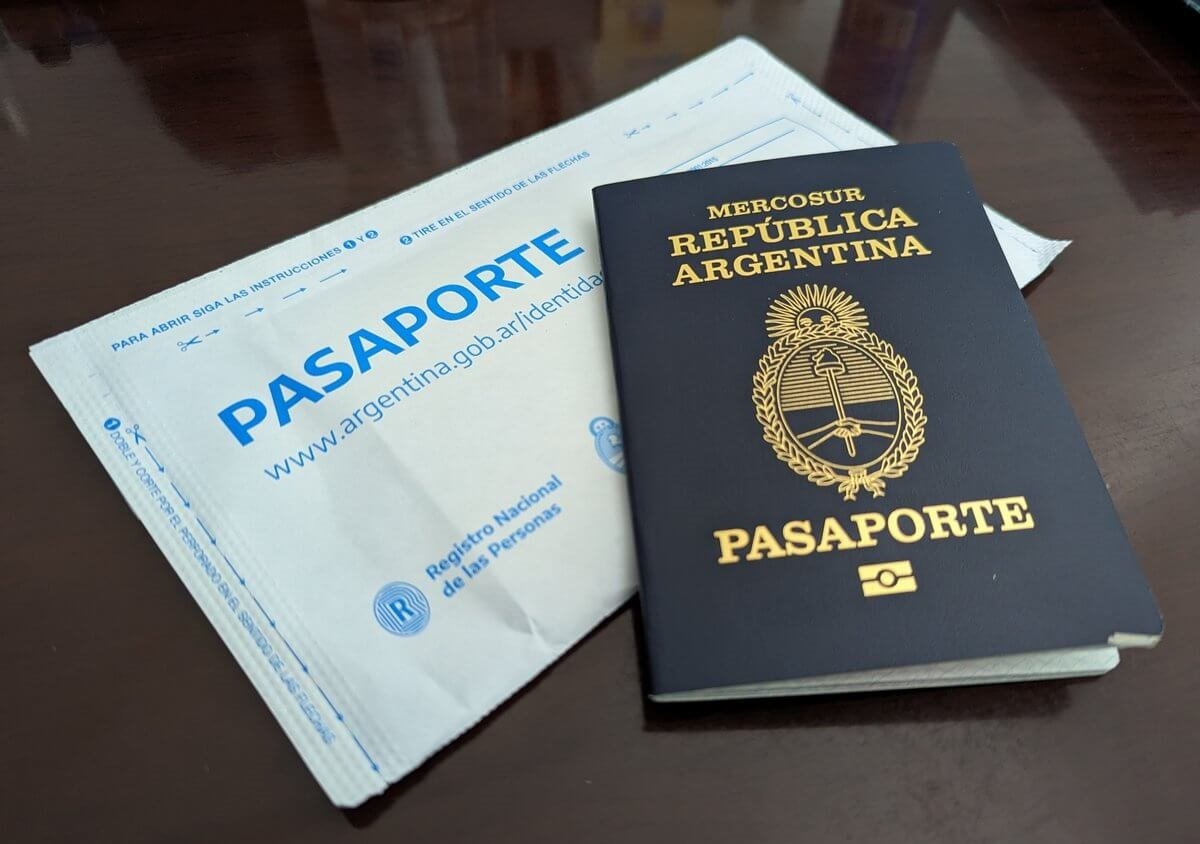
Only two things are on you — everything related to the vehicle is handled by Southwind before you ever reach the border.
Passport for every traveler (not a national ID card — this crossing requires a passport for non-Mercosur nationals).
SAG–Customs joint declaration. This is a personal sworn statement, so each traveler over 18 signs their own.
What You Cannot Bring Across

Fresh Produce: Apples, oranges, bananas, berries, or any unbagged raw fruits and vegetables.
Meats & Poultry: Raw beef, chicken, pork, cured meats (jamón serrano, prosciutto, salami, or dried beef jerky).
Dairy Products: Unpasteurized cheeses or unsealed liquid milk products.
Seeds & Organic Items: Raw seeds, nuts in their shell, flowers, soil, or live plants.
Homemade Foods: Sandwiches, salads, or cooked meals prepared in hotels.
Crafts: Made from raw animal or plant material (wood, horn, hide).
Commercially packaged snacks generally pass but must be declared. Undeclared items that fail inspection are confiscated on the spot, and false declarations carry fines — declaring everything, even when unsure, is the safer move.
Private Chauffeured Vehicle vs. Public Bus: Operational Differences
How you cross the border dictates whether your transfer takes 3 hours or 7 hours.
The Public Bus & Large Group Tour Bottleneck:
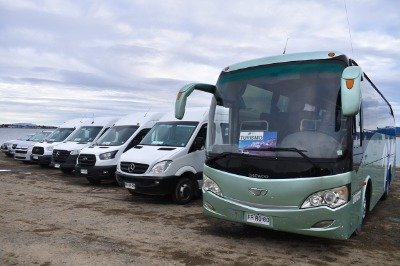
Public buses and group tour coaches depart El Calafate all together between 05:30 AM and 07:00 AM, arriving at Cancha Carrera simultaneously when the border opens at 08:00 AM.
Mass Queues: A single large coach brings 45 to 50 passengers to the immigration counters at once. If three buses arrive simultaneously, wait times exceed 2 hours.
Full Cargo Scans: Every piece of luggage stored in lower bus compartments must be unbagged and scanned individually at SAG checkpoints, creating significant delays.
Fixed Route Terminals: Public buses drop passengers at public terminals in Puerto Natales or Cerro Castillo, requiring secondary vehicle changes to reach lodges inside Torres del Paine.
The Private Chauffeured Experience:
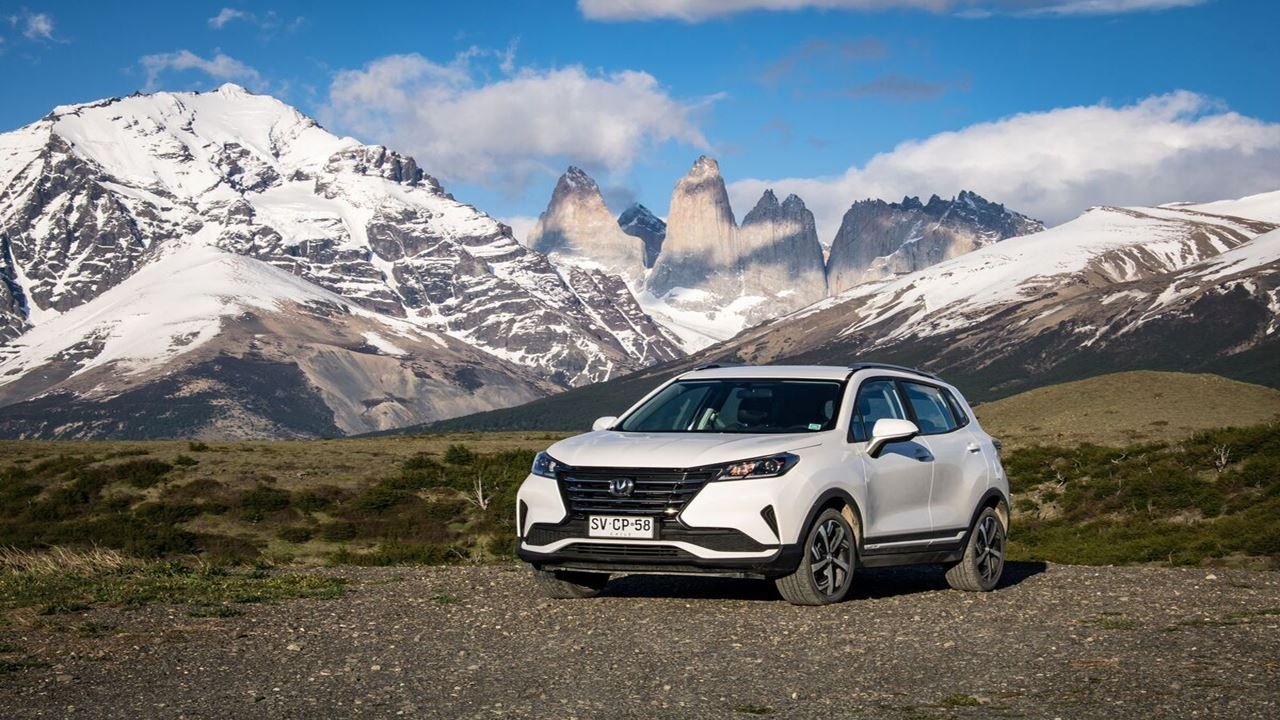
Custom Departure Timing: Private transfers depart El Calafate at optimized times, arriving at the border between bus schedules to avoid high-volume queues.
Pre-Filed Manifests: Drivers submit passenger profiles in advance to streamline immigration line items.
Rapid SAG Inspections: With only your party’s carry-on luggage to scan, SAG processing takes under 15 minutes.
Direct Lodge-to-Lodge Transit: Your private vehicle takes you straight from your boutique hotel in El Calafate across the border directly to your lodge inside Torres del Paine (such as Explora, Tierra, Awasi, or Las Torres) without intermediate bus changes.
Border Crossing Comparison Summary
Metric / Parameter | Private Chauffeured Service | Public Bus / Large Group Tour |
Total Travel Time | 4.0 to 5.0 hours | 5.5 to 7+ hours |
Schedule Flexibility | Fully customized departure times | Fixed, early-morning departures (05:30 AM - 06:30 AM) |
Border Queue Impact | Minimal; timed to bypass bus waves | High; queuing behind 45+ passengers per vehicle |
SAG Luggage Handling | Swift, dedicated handling of private bags | Full cargo bay unloading and group scanning |
Destination Reach | Door-to-door direct to national park lodges | Bus terminal drop-offs (Puerto Natales or Cerro Castillo) |
What Your Driver Handles
Traveling in a private vehicle with a Southwind driver removes most of the friction of this crossing. The vehicle's temporary export and import paperwork, fuel planning — there's no station between the border and Puerto Natales, so the tank is filled in El Calafate before departure — and the timing of the trip are all sorted ahead of time.
Drivers who make this crossing regularly know that reaching the border right at the 8:00 AM opening beats the wave of tour buses that tends to build by mid-morning, and they plan departure times around that. You still step out at both posts to present your own passport and SAG declaration — that part is personal and can't be delegated — but there's no line management or paperwork to sort out on your end.
The Bottom Line
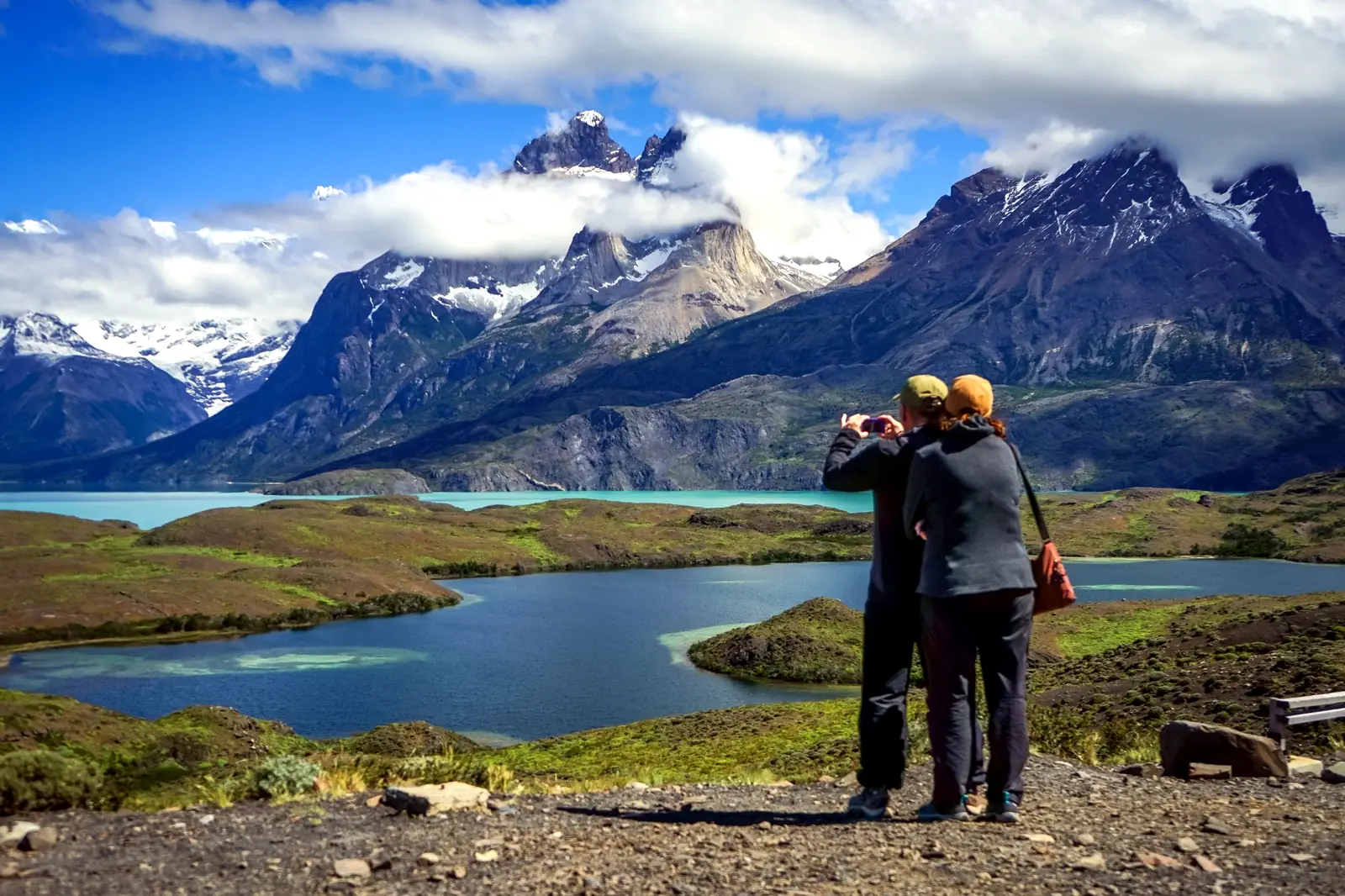
Three hours is a realistic estimate for El Calafate to Cerro Castillo, including both border posts — plan on more if you're headed deep into the park, or if you're crossing during the December–March rush. The only two things that stay with you are your passport and your signature on the SAG declaration; everything else is arranged before you leave the hotel.
Southwind Experience coordinates this crossing for every binational Patagonia itinerary from our base in El Calafate, handling vehicle paperwork, fuel planning, and departure timing ahead of time.
Check our binational Patagonia itineraries →