
Argentina vs Chile: Which Gateway Is Best for Exploring Patagonia?
Patagonia is a vast and untamed region shared by Argentina and Chile—a land where nature rules with fierce beauty. Its magic lies in its incredible diversity: towering glaciers, ancient forests, crystal-clear rivers, turquoise lakes, dramatic mountain peaks, and a wildlife-rich steppe that stretches to the horizon.
Despite its famously unpredictable weather—capable of changing in minutes—thousands of travelers venture here each year, drawn by the promise of adventure and awe-inspiring landscapes.
Both Argentine and Chilean Patagonia offer unforgettable experiences. Below, we explore two of their most iconic destinations: Torres del Paine National Park in Chile and El Chaltén in Argentina, the country’s official trekking capital.
Torres del Paine, Chile: The Icon of Chilean Patagonia

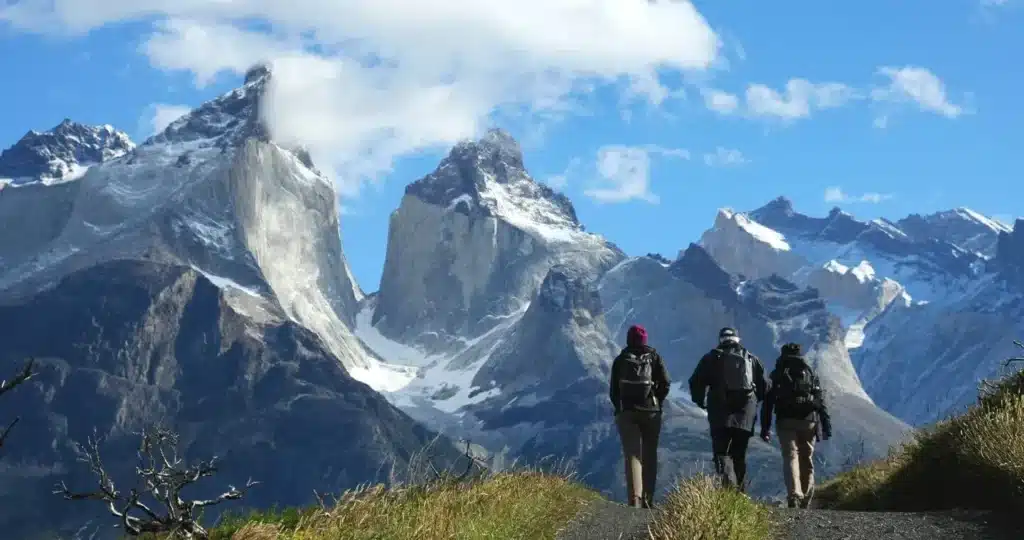
Torres del Paine National Park is one of the most visited and admired destinations in Chile—and arguably in all of Patagonia. Its name comes from the famous granite towers that dominate the skyline and captivate visitors from around the world.
How to Get There
The main access route to Torres del Paine is the fully paved CH-9 Highway, which connects Punta Arenas and Puerto Natales. From Puerto Natales, the drive to the park takes about two hours, while from Punta Arenas it takes roughly four and a half. Most travelers fly into Punta Arenas or Puerto Natales from Santiago, but it is also possible to reach the park from El Calafate in Argentina. Many visitors cross the border by land, enjoying a scenic five-hour drive that links the Argentine Patagonia with Puerto Natales before continuing on to the park.
When to Visit
Torres del Paine is a spectacular destination year-round. Summer (December to February) brings the most pleasant weather and the largest number of visitors, while the broader season from October to April ensures that all major hiking trails are open and accessible. Winter (May to September), transforms the park into a quiet, snow-covered landscape; although some services close, the solitude and dramatic winter scenery offer a unique and unforgettable experience. As locals like to say, “If you don’t like the weather, wait ten minutes,” a reminder of the park’s famously changeable climate. Temperatures range from around 20°C in January to –20°C in July. Torres del Paine is a spectacular destination year-round.
What to See and Do
Across its 227,000+ hectares, the park showcases iconic peaks such as the Towers and the Cuernos, massive glaciers, turquoise lakes, dense forests, and wide, open steppe.
For hikers, Torres del Paine is a world-class destination. The park offers legendary routes such as the Base Torres trek, one of the most iconic day hikes in Patagonia, leading to the famous viewpoint at the foot of the granite towers. More experienced trekkers can take on the W Circuit, a multi-day adventure that includes highlights like the French Valley, Grey Glacier, and the Base Torres viewpoint. For those seeking a full immersion into the park’s wilderness, the O Circuit encircles the entire massif, crossing the remote John Gardner Pass for breathtaking views of the Southern Patagonian Icefield.
Its wildlife is equally diverse: guanacos, foxes, skunks, armadillos, huemules (a protected native deer), rheas, condors, eagles, black-necked and coscoroba swans, several duck species, and—with luck—the elusive puma, highly protected within the park.
El Chaltén, Argentina: Trekking Capital of Patagonia

Nestled within Los Glaciares National Park in Santa Cruz Province, El Chaltén is a small mountain town surrounded by some of Patagonia’s most iconic peaks, including Mount Fitz Roy and Cerro Torre. Its name comes from the Indigenous word meaning “smoky mountain”, a reference to the clouds that often swirl around its summits. Founded in 1985, it is one of Argentina’s youngest towns and today is a vibrant hub for outdoor lovers, home to about 1,200 residents.
How to Get There
The easiest and most common way to reach El Chaltén is by flying from Buenos Aires to El Calafate, which is home to the nearest airport and offers daily flights operated by major airlines. Once in El Calafate, El Chaltén lies 220 km to the north, accessible via a scenic three-hour drive along Route 40, with views of expansive steppe, glacial lakes, and, on clear days, the first glimpses of Mount Fitz Roy. Travelers can make the journey by private transfer or regular bus service, all departing from the town of El Calafate. For those arriving from Chile, it is also possible to cross the border from Puerto Natales or Torres del Paine and connect by road to El Calafate before continuing on to El Chaltén.
Best Time to Visit
The ideal months to visit El Chaltén are from October to April, when the weather is milder, the days are longer, and all major hiking trails are accessible—though this is also the busiest time of year, especially from December through February. March is a particularly vibrant month, as the town hosts the National Trekking Festival, attracting outdoor enthusiasts from across the country and creating a lively, celebratory atmosphere.
Winter, from May to September, brings colder temperatures, shorter days, and reduced services, as some restaurants and accommodations close for the season. However, for travelers seeking quiet trails, snow-covered landscapes, and a sense of solitude that is rare during the summer months, winter in El Chaltén offers a serene and strikingly beautiful experience.
Trails for Every Level
El Chaltén is Argentina’s official trekking capital for good reason. Numerous day hikes of varying length and difficulty start directly from the town. The iconic Laguna de los Tres trail offers unforgettable views of Mount Fitz Roy, while Laguna Torre leads hikers to Cerro Torre, its glacier, and its icy lagoon. For those seeking a more challenging full-day hike with panoramic vistas, Loma del Pliegue Tumbado rewards adventurers with one of the most sweeping views of the entire valley, Fitz Roy, and Cerro Torre. Another classic excursion is the journey to Lago del Desierto, a beautiful glacial lake north of El Chaltén surrounded by dense forest and dramatic peaks, ideal for gentle walks or longer hikes such as Huemul Glacier viewpoints.
Shorter and easier options include Laguna Capri, Chorrillo del Salto, Mirador del Cerro Torre, Mirador de los Cóndores, and Mirador de las Águilas, all offering spectacular scenery without long distances. The trails wind through lenga forests and showcase typical wildlife of the Andean-Patagonian forest and steppe: condors, foxes, armadillos, guanacos, protected huemules, woodpeckers, and numerous bird species.
Argentina or Chile? The Real Answer: Both

Patagonia transcends borders. Each side offers its own landscapes, trails, and ways of experiencing the region’s wild beauty. Whether you dream of dramatic granite towers, legendary trekking routes, or encounters with Patagonian wildlife, combining Argentina and Chile is the perfect way to discover this extraordinary corner of the world.
Plan your trip according to the season—remember that southern hemisphere summer and winter fall on opposite dates from Europe—and prepare your itinerary in advance to make the most of your adventure.
Ready to experience Southern Patagonia? Contact us and let us design the perfect journey across Argentina and Chile.